Gear
This is what's in the bag. This is not sponsored, its just the equipment I actually use, why I use it, and what it's for. Updated as things change.
I've settled into a kit that works for the way I shoot, which is to say, often in remote or difficult conditions, usually with limited time at any given location, and almost always wanting both a wide angle and a long lens immediately available. Everything on this page has earned its place. Some of it barely fits in the bag. Most of it has been somewhere cold.
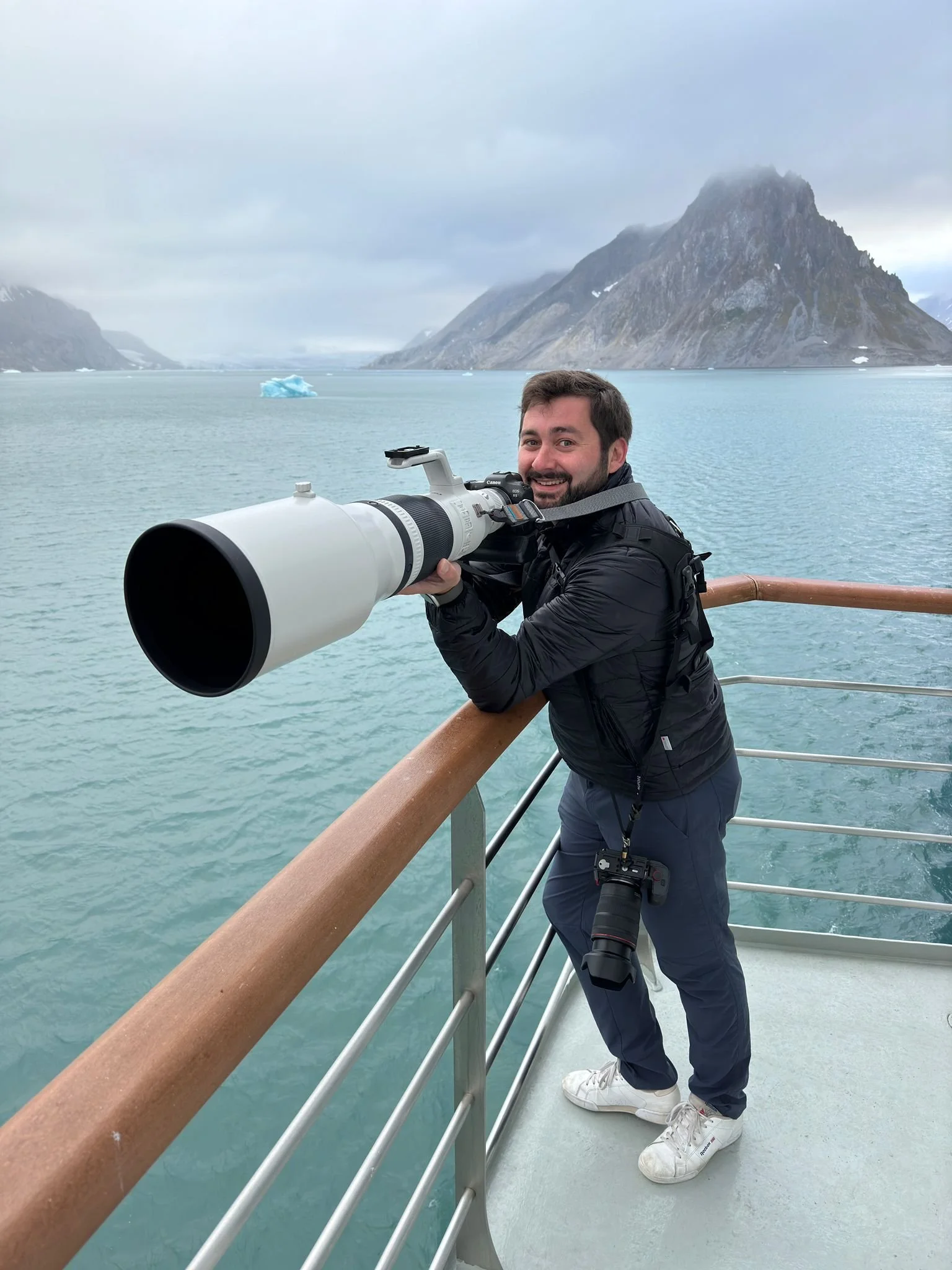
A note on two bodies: I run two Canon R5s as my primary system, and this is intentional. On any expedition or wildlife shoot, the cost of switching lenses is a missed shot. Having a wide and a long active simultaneously isn't extravagance, it's just how this kind of photography works.
Cameras
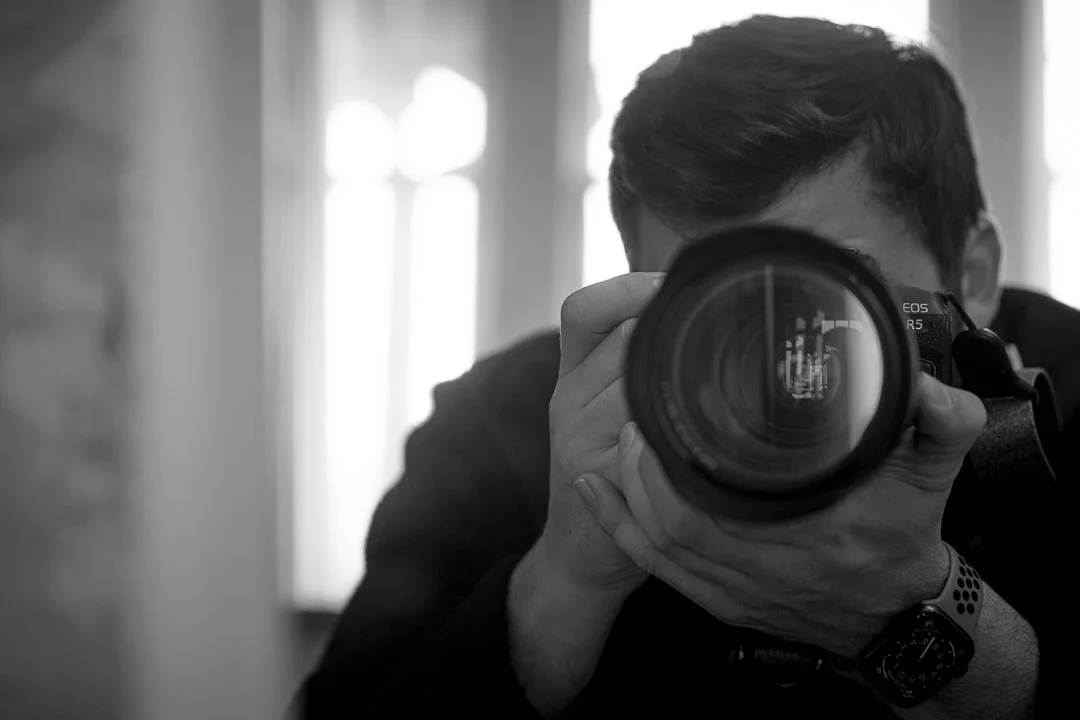
Canon EOS R5 ×2
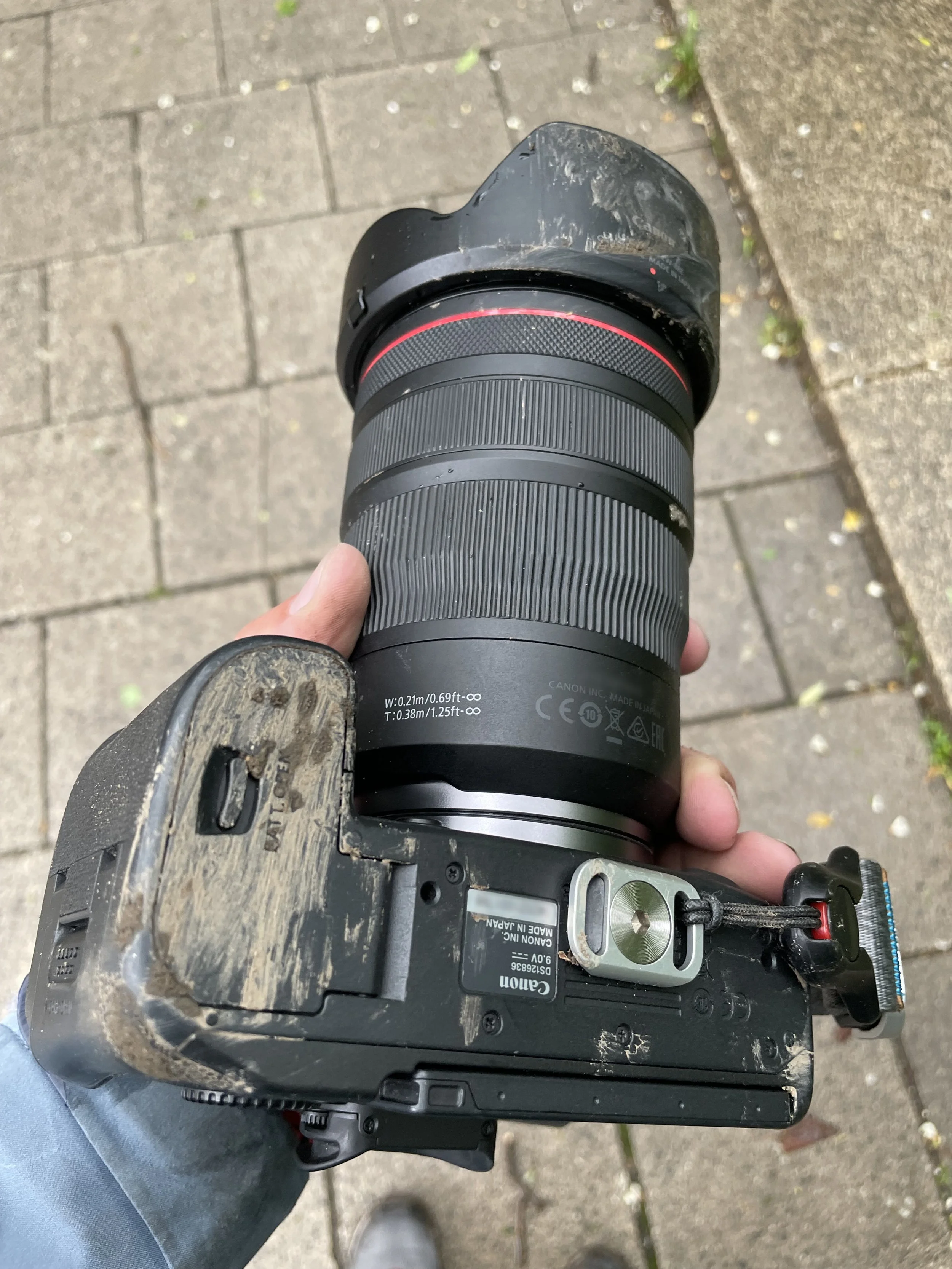
Primary · Mirrorless Full FrameMy workhorses. I run two of these simultaneously on any expedition or wildlife shoot, one with a wide angle and one with a long lens, because switching glass costs shots. The autofocus is extraordinary: fast, accurate, and intelligent enough to track a bird in flight or a seal hauling across ice without much intervention from me. If there's one piece of kit I'd never compromise on, it's these.
Canon Battery Grip ×2
Accessory · R5 CompatibleThese are not always in the bag, but I reach for the grips when I'm intentionally shooting a lot of vertical frames, or when I'm heading somewhere that'll demand extended battery life and I don't mind carrying the extra weight. In cold environments, battery drain accelerates quickly, so the grip earns its place on polar expeditions.
Fujifilm X-T30 II
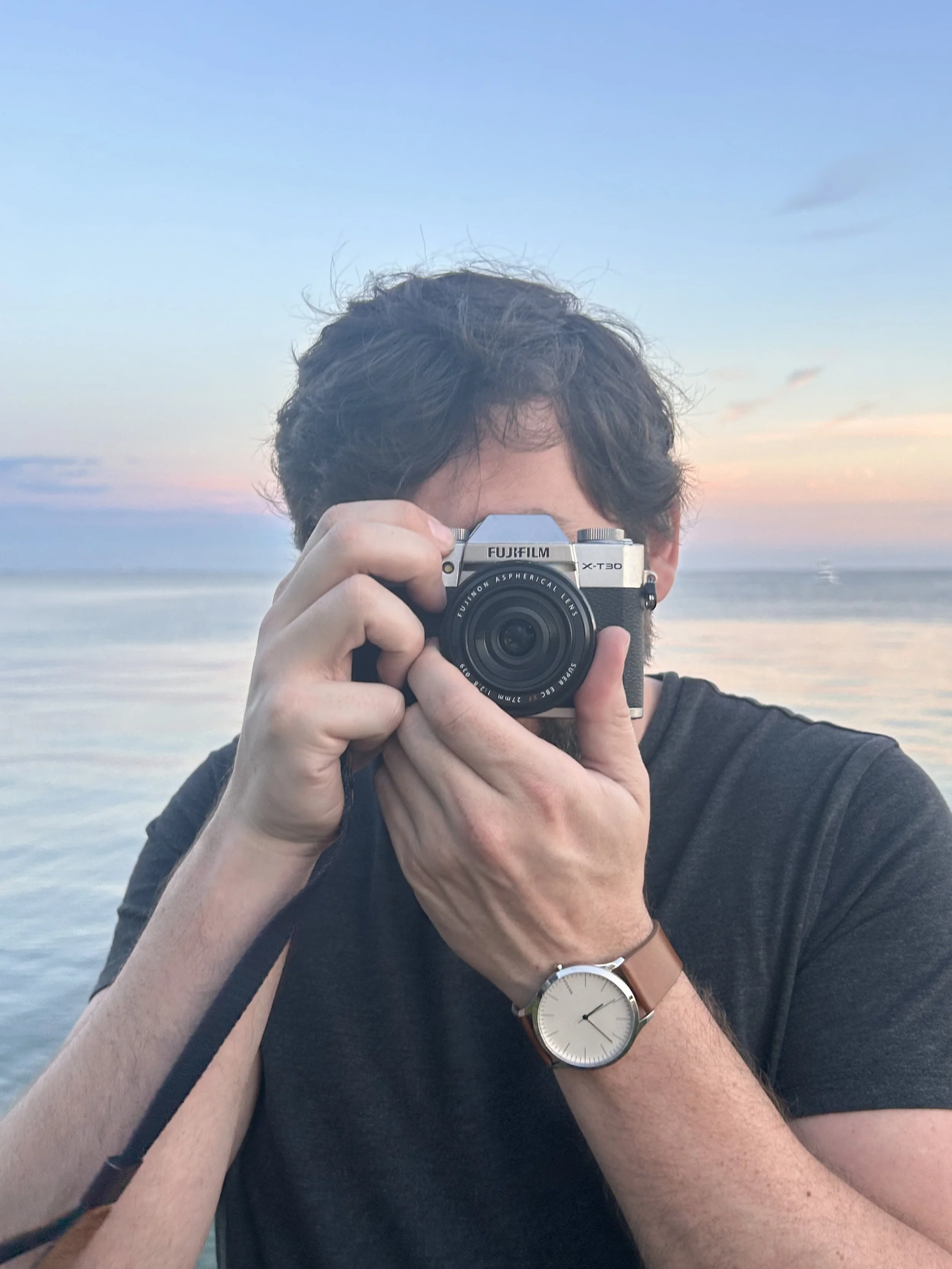
Secondary · APS-C MirrorlessMy take-everywhere camera. Small enough to slide into a jacket pocket, but it shoots like a proper camera. It sports full manual control, excellent image quality, and a Fuji color rendering that I genuinely love. It goes everywhere the R5s can't or shouldn't: casual travel days, street photography, situations where a big Canon rig would change how people interact with the scene. Almost always paired with the 27mm f/2.8.
iPhone 17 Pro
Always On MeIn my pocket everywhere, always. I use all three lenses, particularly the wide and the telephoto, and the computational photography is genuinely impressive. Beyond the obvious, I use it for location scouting and, usefully, whenever I'm shooting with the big cameras I try to take one quick shot with the iPhone because it embeds GPS coordinates. Having that location data attached to a reference image has saved me more than once when trying to remember exactly where a particular shot was taken.
Pentax KX
35mm FilmThis is the camera I learned film photography with: a proper 35mm film SLR. I shot film on it as a kid, developed it myself, and printed enlargements in a darkroom. I still use it occasionally, not for any professional reason, but because there's a quality of attention that shooting on film demands that I find useful to return to. You can't spray and pray on a roll of 24. Every frame has to count.
Ricoh XR-10
35mm FilmAnother 35mm film camera I shoot with occasionally, just for the pleasure of it. There's something about the unpredictability of film, the slight imprecision, the waiting, that keeps me honest as a photographer. Digital is better in almost every objective sense. Film reminds me why that doesn't always matter.
Canon Lenses
Canon RF 15-35mm f/2.8L IS USM
Ultra-Wide ZoomMy widest lens and one I reach for when I want to put the viewer inside a scene with tight spaces, dramatic foregrounds, or environmental portraits. The f/2.8 aperture means it earns its place even in low light. On expedition it's often what goes on the second body when I want wide coverage immediately available.
Canon RF 24-70mm f/2.8L IS USM
Standard Zoom · WorkhorseThe lens that does everything in the middle. Whether for portraits, street, travel, or general documentary work, the 24-70 range covers the majority of situations where I'm not specifically reaching for something wider or longer. Fast, sharp, and reliable. If I could only bring one zoom, this would be a serious contender.
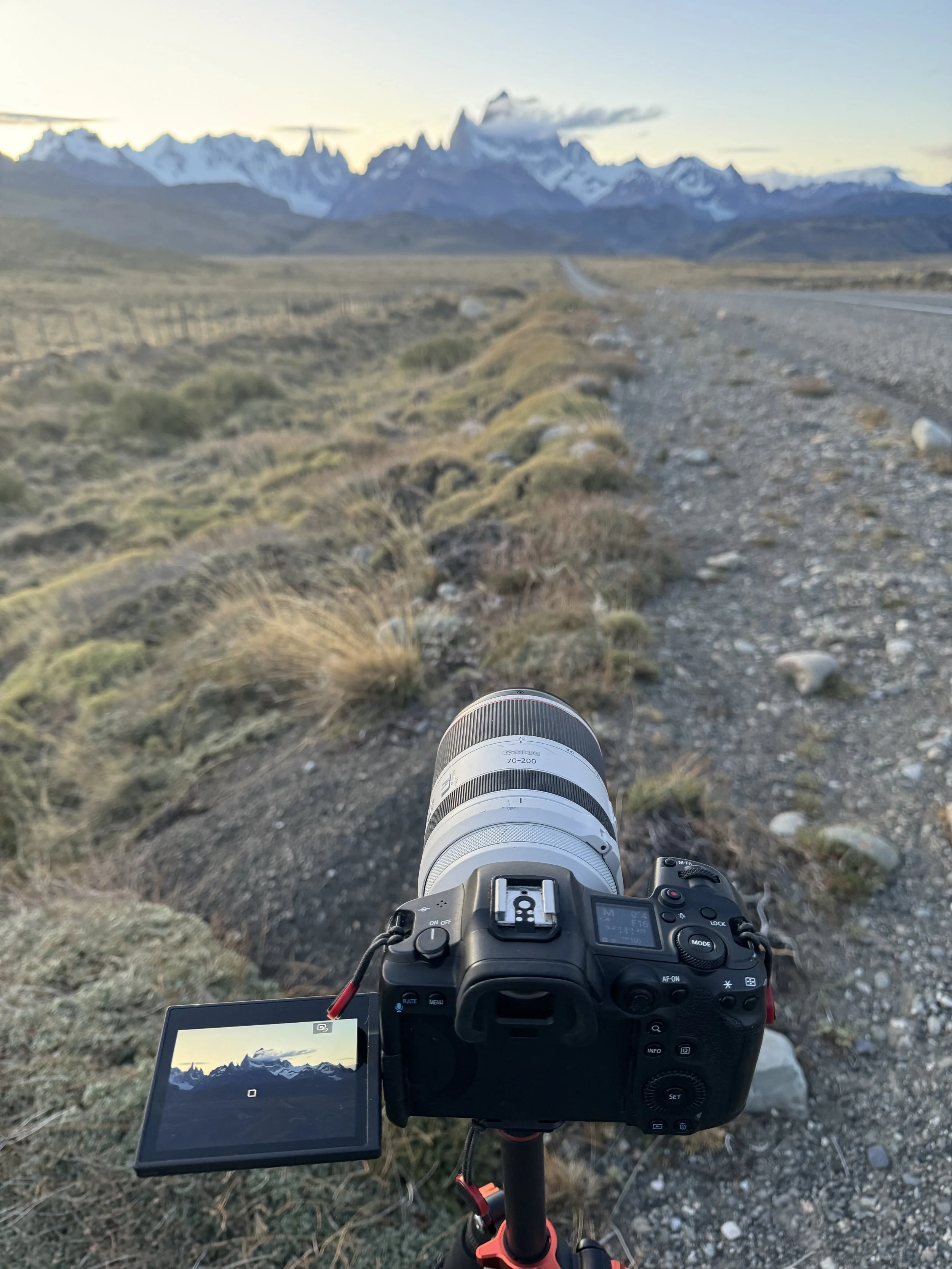
Canon RF 70-200mm f/2.8L IS USM
Telephoto ZoomThe telephoto workhorse. Fast enough for wildlife in reasonable light, versatile enough for portraits, landscapes, and compression effects. The f/2.8 aperture is what makes this lens. At 200mm with the background compressed and the subject separated, you're getting images that slower lenses simply can't produce. On expedition this is frequently the lens on my second body.
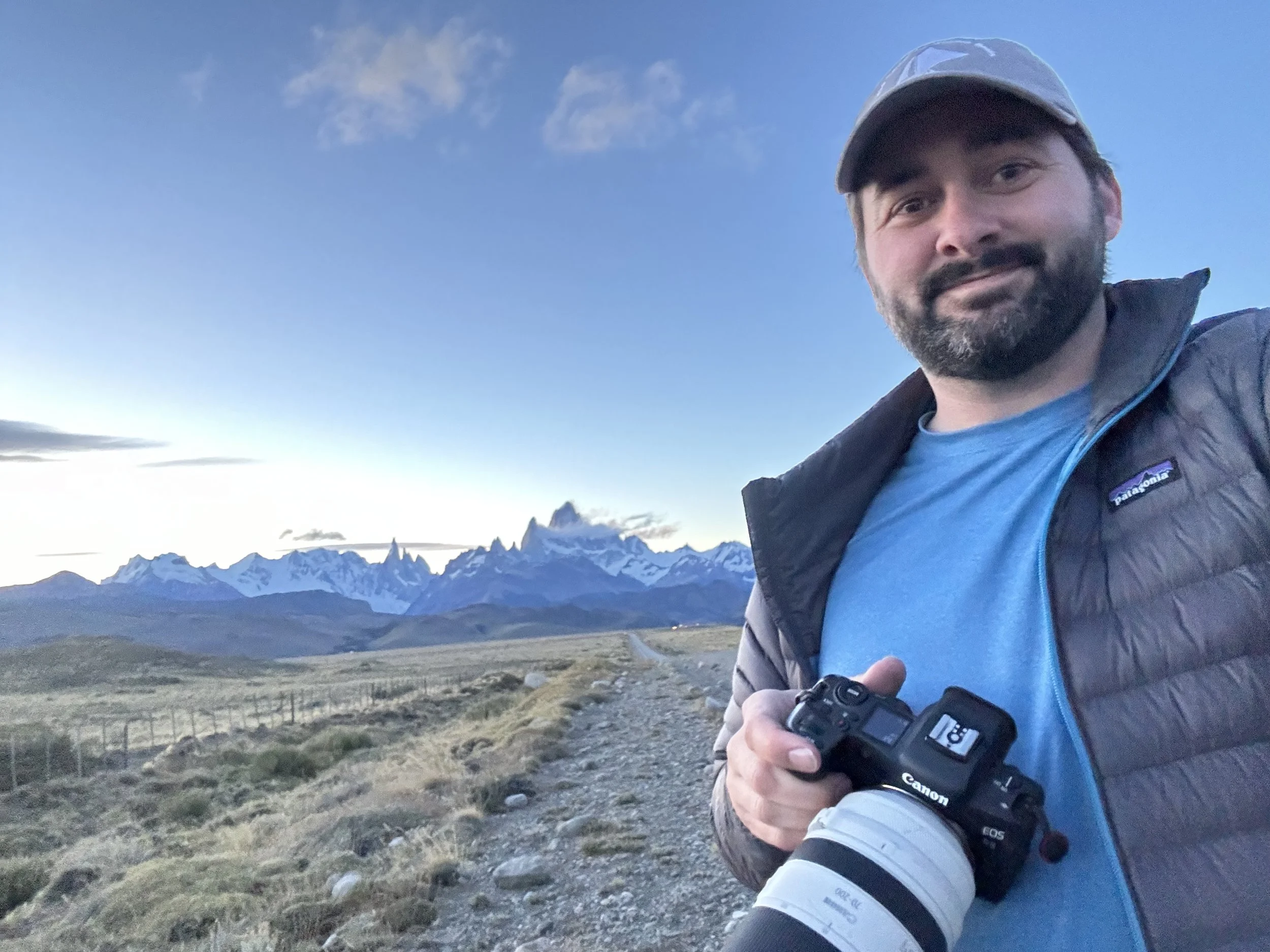
Canon RF 100-500mm f/4.5-7.1L IS USM
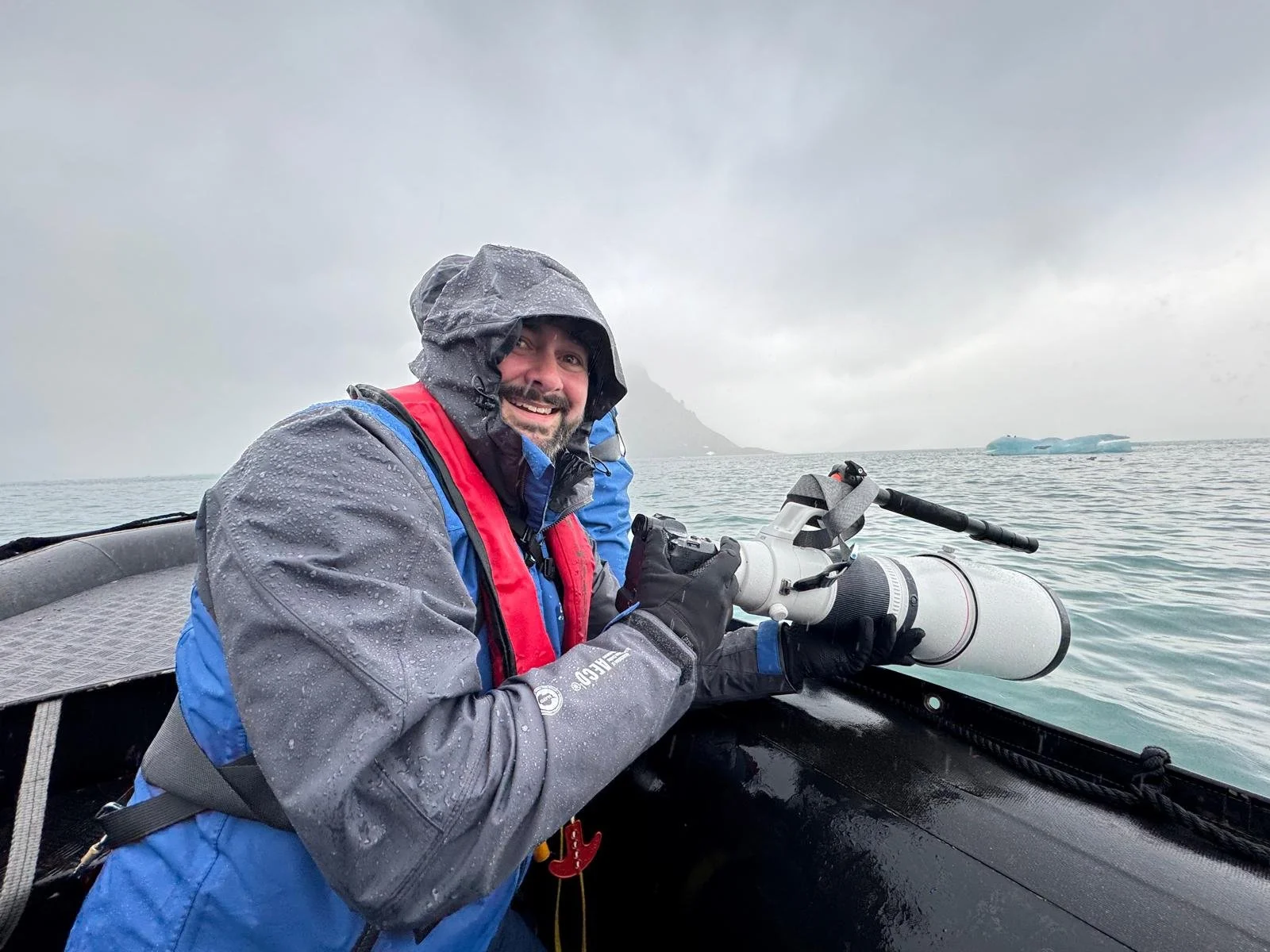
Super-Telephoto Zoom · WildlifeMy dedicated wildlife lens. The reach is essential when you're working at the minimum required distances from animals. In Antarctica, in wildlife reserves, anywhere you need 400-500mm to fill the frame without disturbing the subject, this is the ticket. It's slower than the 70-200 at the long end, but paired with the R5's autofocus system the results are consistently strong. Extended to 500mm with the 2x teleconverter when the situation demands it, though that does cost you speed.
Canon EF 40mm f/2.8 STM + EF-RF Adapter
Prime · StreetHonestly? It's not a great lens. The image quality doesn't come close to the RF glass. But I love the 40mm focal length for street photography. It's close to how I see the world, wide enough to include context but not so wide that it distorts. This lens is tiny, light, and utterly unintimidating to shoot with. Sometimes that matters more than optical perfection. I use it with the EF-RF adapter until Canon builds a native RF 40mm worth owning.
Canon RF 50mm f/1.2L USM
Prime · Low LightThe 50mm f/1.2 is a special lens. The bokeh at f/1.2 is unlike anything else in the RF system. The soft rendering and the separation between subject and background is something the zooms simply can't replicate. I reach for it in low light situations and whenever I want a more intimate, subject-focused feel. It's heavy, it's expensive, and it earns every bit of both.
Canon RF 100mm f/2.8L Macro IS USM
Macro · Short TelephotoPrimarily a macro lens, though it pulls double duty as a short telephoto portrait lens when I don't need the reach of the 70-200. The macro capability opens up a completely different way of seeing details in insect life, plant textures, or nature — things that are invisible at normal shooting distances.
Canon RF 2x Teleconverter
ExtenderUsed primarily with the 100-500mm, pushing it to an effective 1000mm at the long end, which is extreme, but occasionally exactly what a situation calls for. Also comes into play when I rent fast super-telephoto primes like the 400mm f/2.8 or 600mm f/4 for specific assignments. The 2x does cost two stops of light and some autofocus performance, so it stays in the bag unless I specifically need it.
Fujifilm Lenses
Fujifilm XF 27mm f/2.8 R WR
Prime · Street · ~40mm FF EquivalentThe lens that lives on the X-T30. At 27mm on APS-C it's the equivalent of roughly 40mm full frame — that focal length I keep coming back to for street photography. It's flat, compact, and completely unobtrusive, which matters when you're trying to shoot candidly. The weather resistance is a bonus. The combination of the X-T30 and 27mm is what I take when I want a camera that disappears.
Fujifilm XF 35mm f/2 R WR
Prime · ~53mm FF EquivalentA classic focal length in a compact, weather-sealed package. The 35mm f/2 is sharper and faster than the kit zoom and small enough to keep the X-T30 pocketable. I use it when I want a slightly tighter, more compressed perspective than the 27mm such as with portraits, travel scenes, or situations where I want a little more subject separation.
Fujifilm XC 15-45mm f/3.5-5.6 OIS PZ
Kit Zoom · ~23-69mm FF EquivalentThe versatile option when I want zoom flexibility without carrying the Canon system. Not the sharpest lens in the world, but practical when I need a range of focal lengths in a small package. Primarily a backup and travel convenience option — the primes get most of the work on the X-T30.
Drone & Specialty
DJI Mavic 3 Pro + DJI RC Pro Controller
Drone · Triple Camera SystemMy drone, used frequently in remote regions where aerial perspectives transform the story a location can tell. The triple camera system (wide, medium telephoto, and tele) gives real creative flexibility from the air. I'm fully licensed: FAA Part 107 commercial certification in the US, operator's license in the UK and EU, and the drone is registered in all three. If you're considering a drone for expedition photography, the licensing is non-negotiable. And it's critical to never fly in a manner that distracts, disturbs, or disrupts wildlife in any way.
Insta360 X5
360° Camera · Action & AdventureA genuinely fun piece of kit for creating adventure videos and immersive 360° images. It goes in the bag on expeditions where I want to capture the environmental experience of a place — the kind of all-around context that a standard frame simply can't convey. Not a replacement for anything, but a different and useful tool for certain kinds of storytelling.
What I Rent
Not everything needs to live in the bag permanently. For specific assignments or expeditions where the situation calls for something outside my standard kit, I rent rather than own. Current regular rentals:
Canon RF 400mm f/2.8L IS USM — When I need the absolute fastest autofocus and maximum light gathering for birds in flight or fast-moving wildlife, this is what I rent. Paired with the 2x teleconverter it becomes an 800mm f/5.6, which is a serious wildlife setup. The weight and cost make ownership impractical, but the results justify the rental fee for the right trip.
Canon RF 600mm f/4L IS USM — In Svalbard I affectionately called this one "the polar bear lens," which tells you exactly what it's for. For situations where I need extreme reach and the 100-500mm isn't cutting it, the 600mm f/4 is what I reach for. At 1200mm with the teleconverter attached, it's an instrument for a very specific purpose. And when that purpose is a polar bear on a distant ice floe, there is no substitute.
A Note on Gear
The kit listed here represents years of refinement, and plenty of mistakes along the way. I'm a firm believer that gear matters up to a point, and then it stops mattering. The Canon R5 is an extraordinary camera, but the photographs I'm most proud of from my early years were taken on far more modest equipment. The investment in glass tends to outlast the investment in bodies, which is why most of my money has gone into lenses. Cameras are nothing more than tools at the end of the day.
I'm a member of Canon Professional Services (CPS), which provides professional-level technical support, equipment loans, and priority repair for working photographers. My drone operation is fully licensed across the US (FAA Part 107 commercial), UK (CAA), and EU (EASA).
If you have questions about any of this, such as what I'd recommend for a first expedition camera, how I approach packing for cold weather shooting, or anything else, feel free to get in touch.
This page is updated as my kit evolves. Last updated: April 2026.